Education in 2026: 6 Trends Reshaping How Students Learn and Prepare for the Future
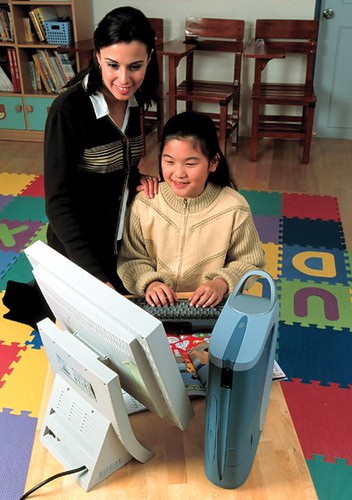
Walk into a classroom in September 2026 and the differences from just a few years ago are hard to miss. Students draft essays alongside AI writing coaches that challenge their arguments instead of completing them. High schoolers present digital portfolios alongside transcripts. Teachers spend less time on grading and more time in one-on-one conferences, while parents follow progress through competency dashboards rather than waiting for report cards.
Education has been through a whirlwind half-decade: pandemic recovery, the AI explosion, shifting enrollment, and a growing rethink of what a degree is worth. Now, in the 2026-2027 school year, many of those experiments have settled into durable practice. Here are the six trends defining education right now, plus practical takeaways for parents, students, and educators.
1. AI Has Shifted From Disruption to Infrastructure
Two years ago, districts were still arguing about whether to allow chatbots in class. That debate is largely over. In 2026, AI is embedded in the learning management systems, tutoring apps, and assessment tools schools already use. The conversation has moved from whether to use AI to how to use it well.
The most mature implementations share a few traits. AI tutors guide students through problems with hints rather than answers. Draft feedback tools flag weak reasoning and citation gaps but leave the rewriting to the student. And teachers use AI for the unglamorous work: generating quiz variations, leveling reading passages, and drafting parent communications in multiple languages.
What responsible AI use looks like now
- AI literacy is taught explicitly. Students learn how models work, where they make confident mistakes, and how to verify outputs, often starting in middle school.
- Teacher oversight stays central. AI suggests; educators decide. Grading and placement decisions still require human review in most districts.
- Transparency is expected. Students disclose AI assistance the way they once cited sources, and assessment design has adapted accordingly.
The schools getting this right treat AI the way earlier generations treated calculators: a powerful tool that changes what students need to practice, not a substitute for thinking.
2. Skills-Based Learning Is Eroding the Diploma’s Monopoly
The old college-versus-career debate has matured into something more nuanced: skills-first pathways. Major employers across tech, healthcare, finance, and manufacturing have dropped degree requirements for a growing share of roles, and hiring platforms now emphasize verified skills over alma maters.
K-12 schools and universities are responding in kind:
- Career and technical education is booming. Programs in healthcare, advanced manufacturing, cybersecurity, and the skilled trades now carry real prestige, with waitlists in many districts.
- Dual enrollment keeps climbing. More high schoolers graduate with college credits or industry certifications already in hand, saving families thousands of dollars.
- Portfolios supplement transcripts. Students document projects, internships, and competencies in digital profiles that colleges and employers increasingly request.
A four-year degree still pays off on average, and for many professions it remains essential. But the automatic assumption that college is the only respectable route has finally cracked, and students are better off for it.
3. Microlearning and Modular Credentials Go Mainstream
Human attention has not changed, but course design has finally caught up with how people actually learn. In 2026, the most popular learning platforms, from language apps to corporate training suites, deliver content in short, focused bursts reinforced by spaced repetition and quick retrieval practice.
Universities have leaned into the model with stackable credentials: learners complete a short certificate, apply it toward a larger qualification, and pause or resume as life allows. For working adults, who now make up a huge share of online learners, this flexibility is often the difference between finishing and dropping out.
The lesson for traditional schools is subtle but important. Students engage more deeply when big units are broken into clear, winnable milestones with fast feedback. Expect to see more mastery-based progression, where students advance when they have demonstrated understanding rather than when the calendar says so.
4. The Teacher’s Role Is Evolving, Not Disappearing
Every wave of education technology arrives with predictions that teachers will be replaced. The 2026 reality is the opposite: with AI handling a meaningful share of grading, differentiation, and administrative paperwork, the human parts of teaching matter more, not less.
Districts still face stubborn staffing shortages in special education, math, science, and rural communities, but retention strategies have improved. Competitive pay in shortage areas, reduced class loads for new teachers, and protected planning time are finally common policy talking points rather than rare perks.
The educators thriving right now tend to share a few habits:
- They act as learning designers and mentors, curating resources and coaching students rather than lecturing from the front of the room all period.
- They use AI tools deliberately and teach students to do the same, modeling verification and ethical use.
- They prioritize relationships and discussion, the things no app can replicate, especially as screen-based solo work increases elsewhere in the school day.
5. Flexible Schedules and Hybrid Models Have Grown Up
Emergency remote learning left a bad taste in 2020, but the flexible models that survived are genuinely good. In 2026, hundreds of districts operate four-day school weeks, mostly in rural areas, using the fifth day for teacher planning, interventions, and enrichment. Hybrid high schools let older students split time between campus, community college, and workplace learning.
The common thread is intentionality. The failures of pandemic-era remote learning taught educators that flexibility only works with structure: clear weekly rhythms, reliable touchpoints with teachers, and explicit instruction in self-management. Schools that build those supports report attendance and engagement gains, particularly among students who struggled in the traditional five-day, seven-period grind.
6. Digital Wellbeing and Student Data Privacy Take Center Stage
The same schools embracing AI are simultaneously tightening rules on phones and social media. Dozens of states and countries now mandate or strongly encourage phone-free school days, and early results echo what teachers predicted: better hallway conversation, fewer distractions, and a modest but real lift in classroom attention.
Data privacy has become a first-order concern as well. With more student work flowing through AI-powered platforms, parents and regulators are asking hard questions about what is collected, how long it is retained, and whether student data trains commercial models. Newer regulations in the U.S. and Europe have pushed edtech vendors toward clearer data practices, and savvy districts now vet tools for privacy the way they vet textbooks for accuracy.
The healthiest mindset schools are adopting is balance: technology where it demonstrably helps learning, and deliberate unplugged time where it does not.
What These Trends Mean for You
For parents
- Ask your school how it teaches AI literacy, not just whether it allows AI tools.
- Encourage your child to build a portfolio of real work: projects, certifications, and experiences that show what they can do.
- Model healthy tech habits at home; phone-free schools work better with phone-conscious families.
For students
- Use AI as a tutor and critic, not a ghostwriter. The students who benefit most stay in the driver’s seat.
- Explore CTE courses, dual enrollment, and certifications early; they stack into real options by graduation.
- Protect your attention. Deep focus is becoming a rare and valuable skill precisely because it is getting harder to sustain.
For educators
- Let AI absorb repetitive tasks so your energy goes to feedback, relationships, and discussion.
- Design assessments that reward process and reasoning, which are far harder to outsource than final answers.
- Keep advocating for the working conditions, planning time, class sizes, and pay, that make great teaching sustainable.
The Bottom Line
Education in 2026 is neither the AI-run dystopia critics feared nor the automated utopia vendors promised. It is something more interesting: a system slowly learning to pair powerful tools with timeless human teaching. The schools thriving this year share a simple philosophy: adopt technology deliberately, measure it against real learning, and never lose sight of the relationships at the center of it all. Whatever your role in a student’s life, that is one trend worth following.